
Welcome this post on the enabling conditions of adaptive teaching. This is part of a wider set of article and resources aimed at improving our ability to achieve inclusive excellence and high expectation within our classrooms.
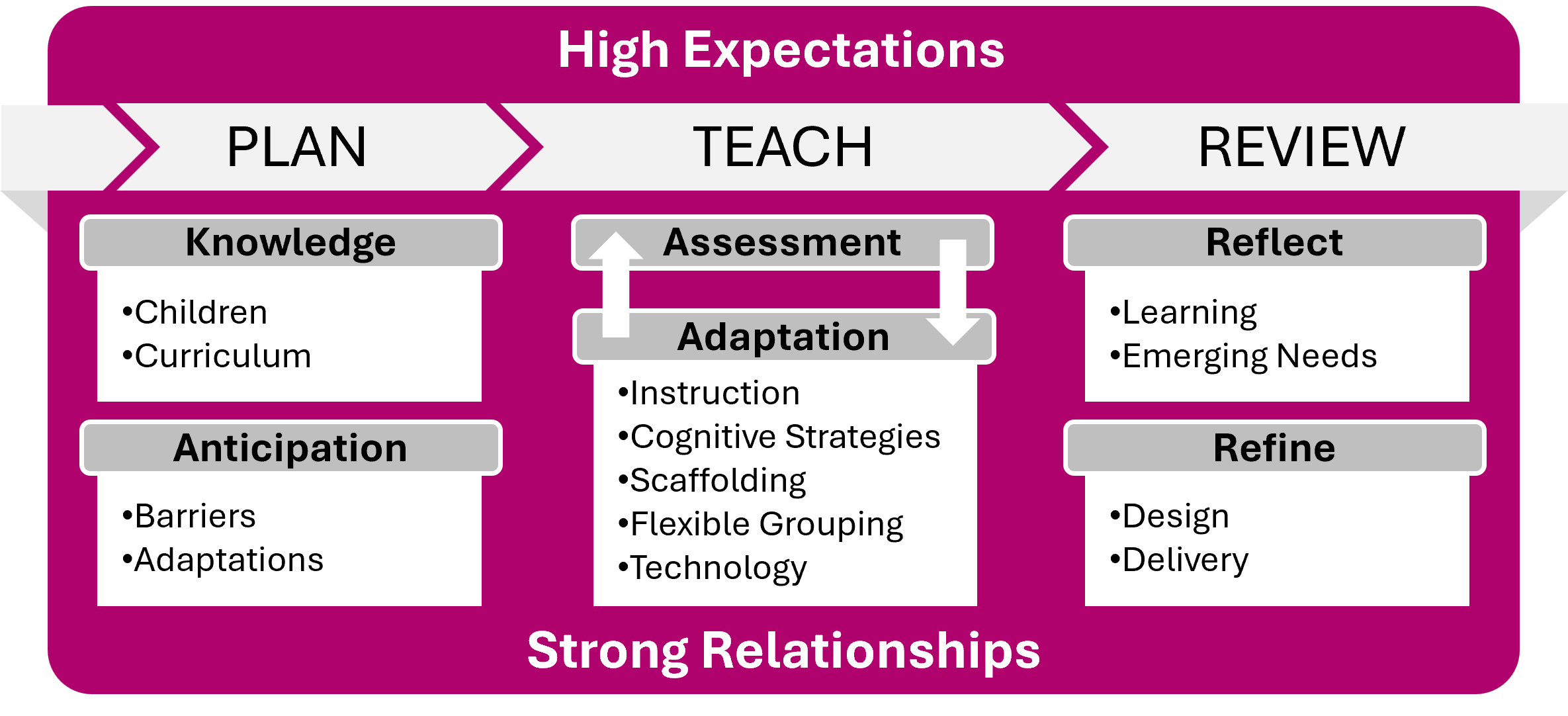
The image below outlines our approach to Adaptive Teaching across the CLF and highlights how the foundations of HIGH EXPECTATIONS and STRONG RELATIONSHIPS are the crucial enabling conditions that unlock everything else.
What?
High Expectations - Adaptive teaching rejects the creation of attainment ceilings, fixed groupings, or pre-determined limitations. In lessons, staff provide challenge in tasks and questioning, insist on high levels of engagement and contribution, and maintain a strong belief in pupils capacity for learning and progress.
Strong Relationships - Adaptive teaching requires foundations of mutual trust and positive regard to be successful. Strong relationships support psychological safety which ensures that assessment is trustworthy, adaptation is accurate, and pupils feel safe to try and retry.
Why?
High Expectations - High expectations create a virtuous cycle where teachers believe every student can succeed which leads to students feeling more valued, confident and capable. This internal belief then drives higher levels of engagement, effort, resilience and performance.
Strong Relationships - Strong relationships create the trust, respect and safety required for effective teaching. Students who have strong relationships with their teachers show higher levels of engagement, take on challenges, accept feedback more positively and experience more social-emotional growth.
How?
Barriers
High Expectations
•Fixed Mindset & Groupings– Not believing that a student is capable of improvement or creating permanent support groups limits our expectations and creates unhelpful limitations.
•Over-Scaffolding – Providing too much support or adding it to early can reduce opportunities for independence, deep thinking and lower student confidence and aspirations.
•Teacher Discomfort – Wanting to ‘save’ students from challenge, hard thinking and failure can rob them of the opportunity to develop resilience and deeper levels of understanding.
•The Compliance Ceiling– Accepting behaviour, engagement and performance that is just Ok can provide short-term comfort but can also create a longer-term reduction in expectation and aspiration.
Strong Relationships
•Lack of Student Knowledge– A lack of understanding of a student’s context, interests and learning needs decreases a teacher’s ability to meet need and build connection.
•Adult Well-being – Poor physical and mental health can have a negative impact on emotional regulation, patience and decision-making which increases the chance of relational damage and erosion.
•Biases and Assumptions – Allowing pre-conceived ideas or beliefs to direct our behaviour can reduce our expectations and unfairly assign blame, damaging levels of trust and respect.
•Low Relational Credit – A lack of investment limits relationship growth and an imbalance between challenge and support creates a low credit level which negatively affects respect, engagement and commitment.
Strategies
High Expectations
Strong Relationships