
Welcome this post on the use of explicit instruction to support adaptive teaching. This is part of a wider set of article and resources aimed at improving our ability to achieve inclusive excellence and high expectation within our classrooms.
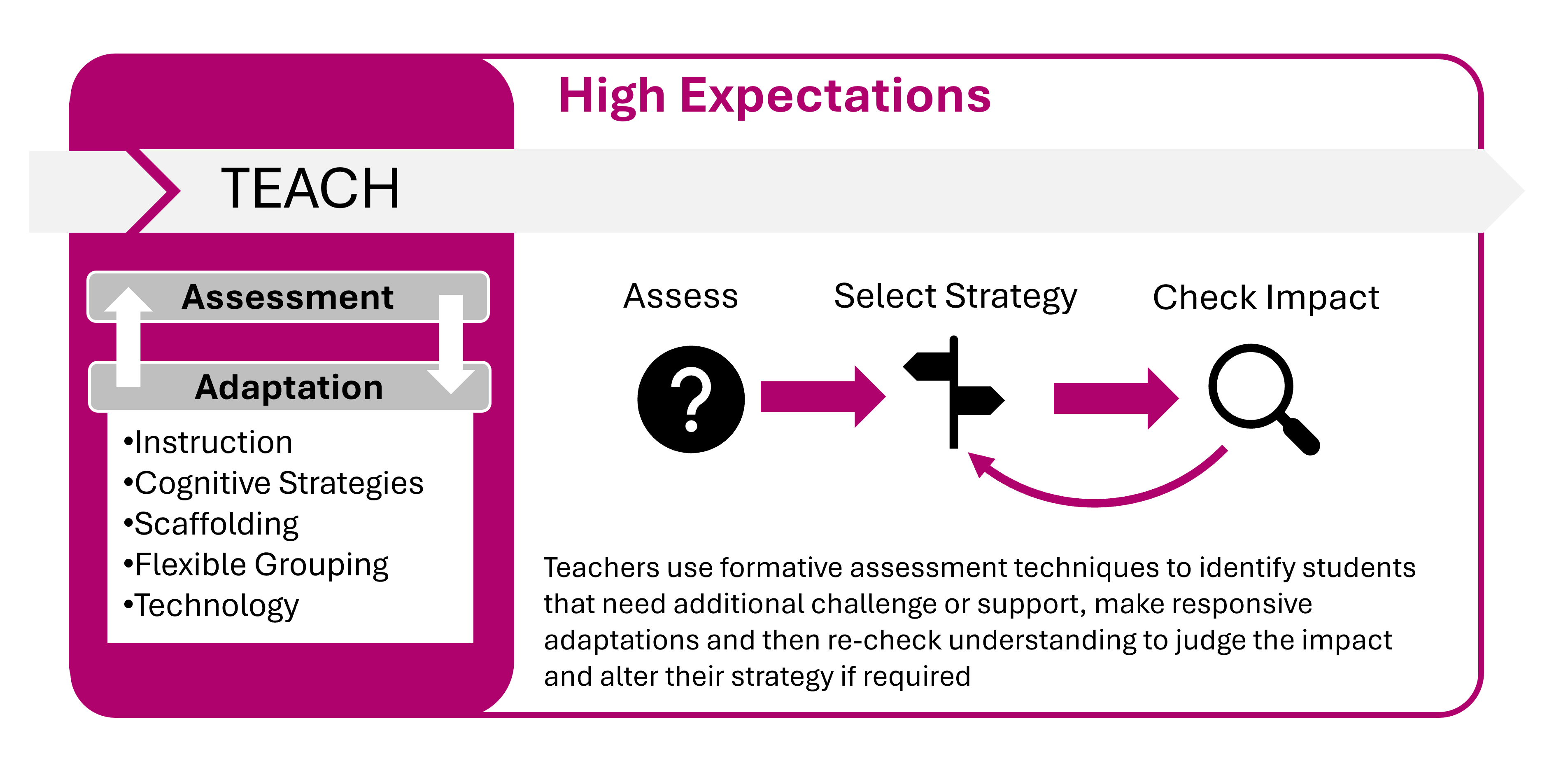
What?
Explicit instruction is a clear, teacher-led method of teaching new skills or concepts in direct, small steps, using modelling, guided practice, and frequent checks for understanding to ensure students grasp foundational knowledge before independent work, making it highly effective for all learners, especially those with special educational needs (SEND).
Why?
Explicit Instruction acts as a powerful enabler of adaptive teaching in several ways:
How?
Explaining
To improve understanding, explanations can be chunked into smaller sections, clear language and images can be used, connections to prior knowledge or other curriculum areas can be made and real-world examples can be used.
Modelling
To improve understanding, modelling can further broken down, exemplars and fixed models an be used, working and non-examples can be explored, and artefacts, manipulatives and digital simulations can be used.
Assessment
To improve understanding, questions can be re-phrased, prompts can be provided, responses can be deepened through additional why and how questions and assessment timings and outputs made more flexible.
Practice
To improve understanding, practice can be completed in flexible groupings, scaffolds can be provided, task timings can be adjusted, the ratio of teacher vs student responsibility can be altered and teachers can facilitate metacognitive talk.
Feedback
To improve understanding, teachers can prioritise verbal feedback, use clearer and more concise language, provide examples and non-examples, explicitly link back to learning goals and provide actionable next steps.
Barriers & Solutions
Below are a series of common challenges that staff may face and some strategies for overcoming them:
| Common Barrier | Possible Solution |
|---|---|
| Attention – the success of explaining and modelling is often dependent on levels of engagement and attention rather than the quality of the instruction and so distractions must be removed wherever possible | Manage any environmental distractions by organising seating and equipment purposefully, deal with disengagement as discretely as possible and don't add unnecessary distraction visually on slides or verbally through explanations |
| Subjectivity- Assessments of understanding need to be as objective as possible resulting is clear indications rather then rely on more subjective measures like confidence, happiness or readiness | Use assessment methods that lead to correct and incorrect answers and test the important elements of understanding linked to the lesson objectives. |
| Inflexibility – Well planned lessons are key to effective teaching but can also become a problem when they are overly rigid and teachers don’t feel able to adapt the timings, groupings and other characteristics of practice tasks. | Maintain a state of reflectiveness during lessons, regularly checking understanding and monitoring success levels and have the confidence to pause and pivot as required. |
Measuring Success
Below are a series of indicators that we can use to judge whether the adaptive strategies have been successful:
Further Study
Below are a series of links to additional reading, research and CLF bright spots