
Welcome this post on the enabling conditions of adaptive teaching. This is part of a wider set of article and resources aimed at improving our ability to achieve inclusive excellence and high expectation within our classrooms.
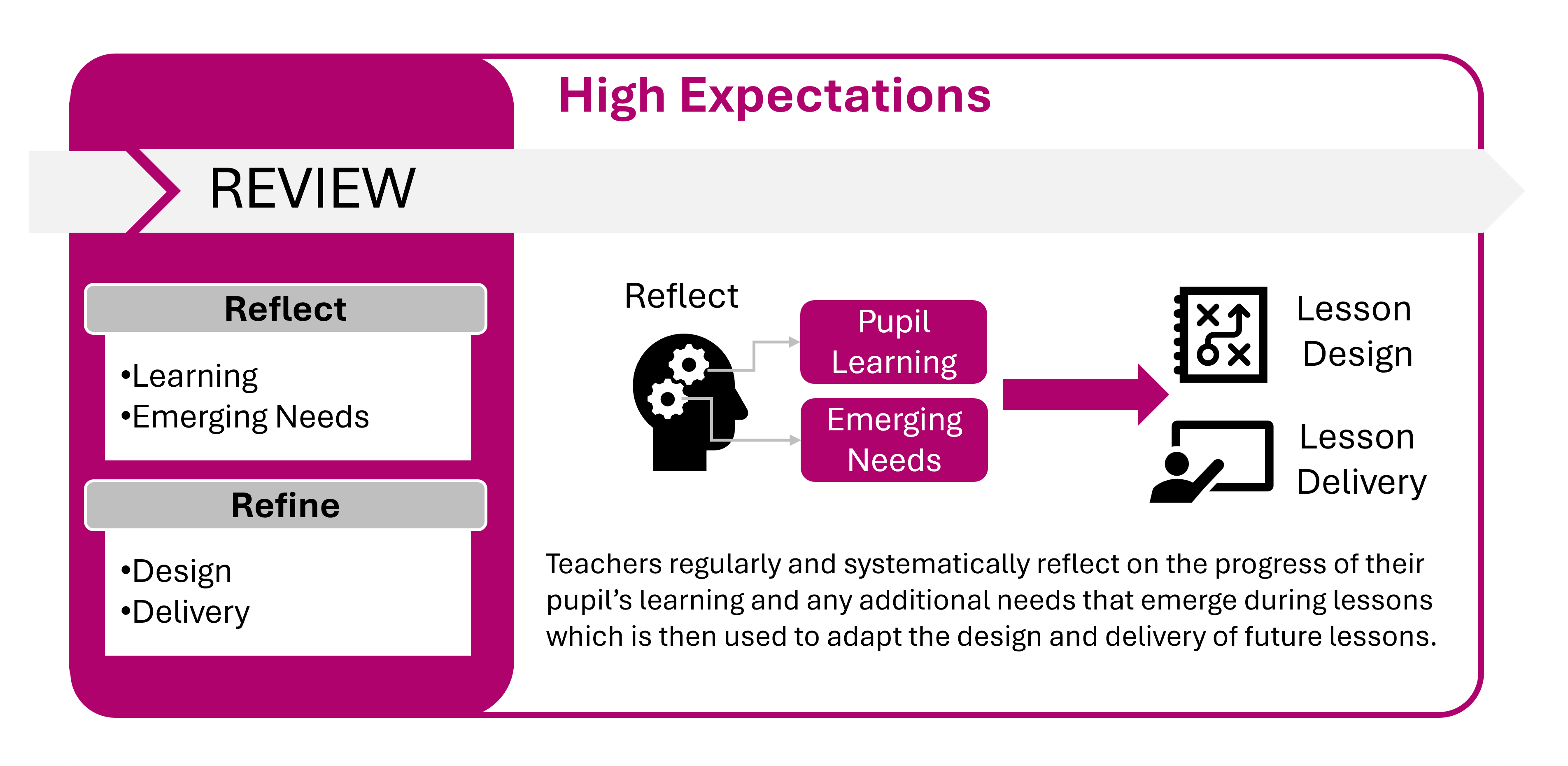
What?
The final piece of the adaptive teaching cycle requires teachers to protect time to reflect on the success of the teaching and learning within their lessons. In terms of adaptive teaching, specific focus needs to be applied to the following questions:
Why?
The review and refine process is important to the long-term success of adaptive teaching because:
How?
Reflection ON action
What it is: Reflection-on-action is a retrospective cognitive process where you analyse a past experience or in our case a lesson. Unlike reflection-in-action (which happens "in the moment"), this occurs after the lesson, allowing for a deeper, more objective evaluation of events and decisions.
Why it matters: It bridges the gap between experience and improvement. By stepping back, you can identify patterns, acknowledge mistakes, and process feelings and reflections that were difficult to make sense of in the moment . This process prevents the unconscious repeating of mistakes and help identifies ways that we can maximise pupil learning in the future.
How to do it: Use a structured model like Gibbs’ Reflective Cycle.- LINK
Active Experimentation
What it is: Active Experimentation is the final stage of Kolb’s Experiential Learning Cycle (LINK) and represents the transition from thinking to doing, where you take the insights or lessons learned from your reflections and apply them to new, practical situations to see if they work.
Why it matters: Knowledge from reflection is great but its impact lays dormant until we do something about it. Actively experimenting with new strategies or approaches allows us to test our assumptions and ideas in the real-world and collect further reflections and feedback which can then drive even more improvement.
How to do it:
Barriers & Solutions
Below are a series of common challenges that staff may face and some strategies for overcoming them
| Common Barrier | Possible Solution |
|---|---|
| Time Scarcity - Not having time to reflect or action plan before the next lesson | Block time in your calendar if possible or speak to others about getting more or repurposing existing time |
| Confirmation Bias - Only looking for evidence or allowing thoughts that support your existing beliefs | Seek out a critical friend who can provide a different perspective and create constructive conflict |
| Emotional Defence - Admitting weakness or failure can feel like a threat to expertise and ego | Reframe failure as part of the learning process |
| Fixed Mindset - Believing that change or improvement are not possible | Maintain a growth mindset and focus on the learning process and not the outcome or success of the result |
| Fear of Failure - Worry that testing something new will cause further decrease in learning or personal embarrassment | Talk through planned changes with a peer and mentally rehearse changes to build success and mitigate challenges |
| Lack of Resources - Not having the tools, budget or permission to make changes | Keep changes small and manageable |
Measuring Success
Below are a series of indicators that we can use to judge whether the planning phase has been successful:
Further Study
Below are a series of links to additional reading, research and CLF bright spots