
The following post explores the concept of ambiversion and challenges the established view that personalities are fixed and divided between two contrasting extremes. The stimulus came from the work of Daniel Pink, Adam Grant and the Positive Psychology website.
Most people will be familiar with the terms extrovert and introvert and will be able to place themselves within one of these categories. These terms emerged from Carl Yung's work on personality in the 1900's and was focused primarily on the source and direction of an individual’s expression of energy.
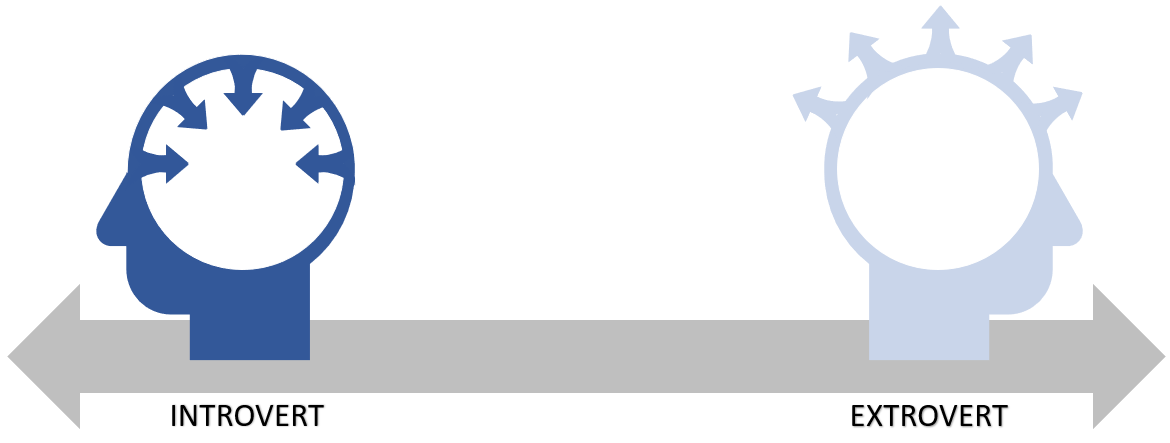
An introvert can be defined as being someone who gets their energy from being in their own company, having time to ‘recharge’ on their own. Someone who is introverted may appear to be withdrawn and shy, although this may not always be the case (Carrigan, 1960). The following are characteristics typically attributed to introversion:
An extrovert is a person with qualities of a personality type known as extroversion, which means that they get their energy from being around other people. Someone who is extroverted may appear as very talkative and maybe popular among peers (Carrigan, 1960). The following are characteristics typically attributed to extroversion.
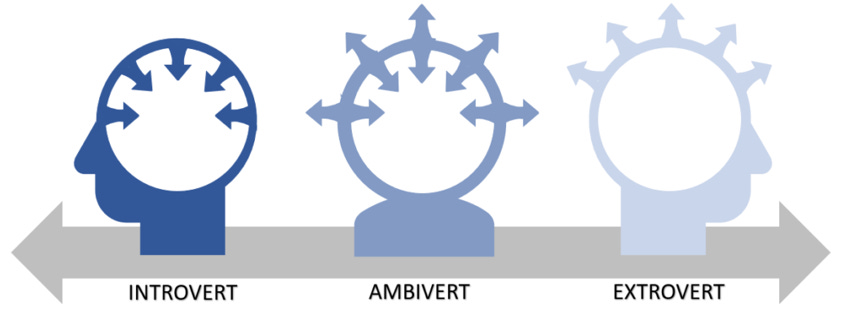
Psychologists such as Jung (1921), Conklin (1923), Heidbreder (1926) and Roback (1927) all recognised that extroversion and introversion described the ends of a personality continuum and that most people would exist somewhere in between. They suggested that a 'normal' person would flexibly generate their energy from a combination of both extremes.
These individuals who have characteristics of both introversion and extroversion are called 'Ambiverts' and this balance has been recognised as an effective personality type for optimal functioning.
Desirable Differences
The personality research literature highlights the benefits of both introversion and extroversion in terms of an individual's happiness, intelligence and work performance, strengthening the suggestion that it may be desirable to have a mixture of attributes. Guy Evans (2021) summarises these benefits in his excellent Simply Psychology article (LINK)
The Power of Responsiveness
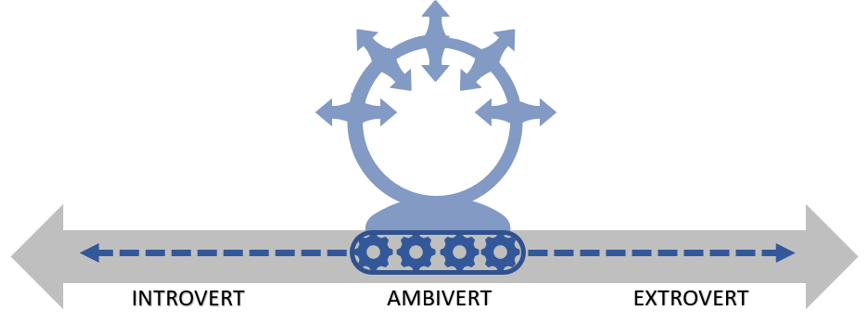
The next step up in terms of highlighting the most desirable personality state may be to describe those individuals who possess the most desirable characteristics of both introversion and extroversion but also have the power (agency) to apply them depending on the situation.
These Agentic Ambiverts have the ability to control the way that they respond to stimuli and recognise which actions are most likely to produce the best results in each situation. They move between introversion and extroversion displaying the most useful attributes.
Below are some characteristics of effective Agentic Ambiverts:
☑They take the lead and are happy being the centre of attention but also comfortable working behind the scenes if and when required.
☑ They understand when to take their time and reflect on their thoughts before making decisions but also when immediate decisive action is needed.
☑ They can work well as part of a team and contribute to interdependent tasks and successfully transfer to independent and self-regulated activities.
☑ They exude energy and enthusiasm during specific situations but are able to harness this and remain focused when task demands change.
☑ They are described by others as acting differently in different situations, showing different sides to their personality in order to achieve successful outcomes.
Developing Ambiversion
For those individuals who place themselves at the extremes of the introversion - extroversion continuum, It may be beneficial to proactively move towards a more central location. Developing these desirable characteristics is no different to the development of another skill or attribute. Individuals must strive to understand more about how to effectively perform the behaviour, seek out opportunities to practice and then reflect on and receive feedback about their behaviour before re-practicing.
In practice this may mean: